Unveiling the Interviewer’s Mind: Exploring 4 Biases in Interviewer Psychology!
Unveiling the Interviewer’s Mind: Exploring 4 Biases in Interviewer Psychology
Unveiling the Interviewer’s Mind: Exploring 4 Biases in Interviewer Psychology

What is Dressing for Success and Why Is It Important? So, you’ve landed an interview for your dream job! Congratulations! Now, it’s time to think about the all-important aspect of making a great first impression: your attire. Whether you’re a seasoned job-seeker or new to the game, it’s always a good idea to take the time to make sure you look your best. After all, your appearance can speak volumes about your level of professionalism and how serious you are about getting the job. In my experience of conducting interviews for more than two decades, I have realized that for most of the aspirants, this is perhaps the most ignored area or falls pretty low in the priority list. Which is a kind of disaster. I have seen interviewees appearing in casuals, t-shirts and many a time in shabby attire. That’s not really good. I have vivid recollection of a specific instance when a candidate had appeared in bright yellow t-shirt that had a few stains on the collar and it was so visible on zoom and it didn’t felt good to me. It also distracted me to some measure. There is a gap, very clear gap in understanding. Dressing for an occasion is an important part of the process and it can not be ignored at any cost. It is important to give respect to the organization because like it or not, they are the buyers and you are a product, no one would ever buy a shabbily packaged product. Remember, Packaging plays a very important role in selling. So, when you are having a professional conversation during an interview, which in a way is a platform to sell yourself or what values you bring on the table for the organization, packaging or attire is extremely important. Make it a point that you understand the concept of dressing well for the occasion, quite well. In this guide, we’ll take a closer look at what you should wear for a job interview, no matter what industry you’re in. This simple step by step approach will provide you with all the necessary guidance you need to step up to the occasion with your attire, and make an everlasting amazing first impression. Let’s get started. Dressing for Success Tip# 1 – Research the Company’s Dress Code Before you start putting together your interview outfit, it’s important to have a good understanding of the company’s dress code. A quick search on their website, social media accounts, and LinkedIn profiles can give you a good idea of the company culture and what employees typically wear. If the company has a formal dress code, it’s best to err on the side of caution and dress more formally. However, if the company has a more relaxed dress policy, you can still aim to look professional while being a little more relaxed with your attire. Remember a bit of company research can take you a long way. Also, give a very close observation on the colors too, you may want to mimic company colors through your attire, that may have some kind of subliminal positive impact on your own candidature for the profile in discussion. It is just a suggestion, but exercise your judgement here. Dressing for Success Tip# 2 – Dress for Business You need to make sure that you look your best while still staying within the company’s dress code If the company has a formal dress code, aim for business attire, such as a suit, dress pants or skirt with a blazer or jacket. For women, a dress or skirt and blouse with heels is also appropriate. Opt for neutral colors such as black, navy, gray, or beige, as these colors are professional and make a positive impression. When it comes to accessories, keep it simple and understated. Avoid wearing excessive jewellery, heavy makeup, or overpowering fragrances. They are distractions and should be avoided at any cost. Dressing for Success Tip# 3 – Pay Attention to the Details As they say, the devil is in the details, and the same applies to your interview attire. Make sure your outfit is clean, pressed, and wrinkle-free. Polish your shoes, and ensure your hair is well-groomed. Take the time to make sure everything is in place and looking its best, from your clothes to your accessories. Also, make it a point that your socks are in line with your shoes and overall dressing. Interviewers notice everything very closely and you never know what my derail the conversation. Dressing for Success Tip# 4 – Be Comfortable It’s essential to feel comfortable in what you’re wearing, so you can relax and focus on the interview. Make sure your clothes fit well and aren’t too tight or too loose. Avoid wearing clothes that are too trendy or that you haven’t worn before, as this can make you feel self-conscious and take away from the confidence you need to nail your interview. Let me be honest, there are times when I am mighty impressed too with the way candidates have dressed up for the interview both face to face and virtually via zoom. And believe it or not, it brings some kind of positive vibe to the interview, a kind of freshness when the candidate is well dressed and have taken right measures in self-grooming. In conclusion, dressing appropriately for a job interview is a crucial aspect of making a great first impression. In conclusion, dressing appropriately for a job interview is a crucial aspect of making a great first impression. By taking the time to research the company’s dress code, dressing for business, paying attention to the details, and being comfortable in your attire, you’ll be well on your way to making a lasting impression and landing the job of your dreams. There are so many videos available online to provide all kind of guidance on how to dress up for the interview, so please go and check them out. Good luck!

What Makes A Good Resume and How Can You Make Yours Stand Out? Hey there! Are you on the hunt for your dream job, but feeling overwhelmed by the thought of putting together a resume? Don’t worry, you’ve come to the right place! Making a resume can seem like a daunting task, but with a little bit of know-how and a lot of attention to detail, you’ll have a professional resume in no time. However you need to steer clear of all the mistakes in the process of making resume. A killer resume acts as a solid enabler in the process of your job search. First up, understand that resume is such an important document in the life cycle of the whole recruitment process. It represents you in person to the organization, without you being there in person, strange! Right? But it is true, when you ship your resume to a recruiter or an organization, your early profile is created in the organization’s mind and in a way, you can say that your first impression is created with that document. So, you have to make it a point that it is drafted with golden standards, the best you ever drafted. If required you should take up professional help to ensure it captures the essence of your skills, experience and knowledge. Keep in mind, a simple mistake or an error in that document will reduce your chances significantly in getting to the job you have been waiting for so long, your dream job. Take your time, don’t rush through the process. You know that if done well and sincerely, this document will make all the difference in the world for you. If you get this right, you have won half the battle. It means that if this document makes a great first impression, there is a very high possibility that your resume will get shortlisted and you will get a face-to-face interview call. So read on, here is a step-by-step approach on how to draft your resume. Step 1: Gather Your Information Before you dive into the writing process, it’s important to gather all of the information you’ll need to create a complete and accurate resume. They are an important part of your profile, and can act as a fulcrum in the selection process. Step 2: Choose Your Format There are a few different formats you can use when creating your resume, including chronological, functional, and hybrid formats. Choose the format that best fits your experience and the job you’re applying for. If you are a fresher, I would suggest you choose the functional format, since your chronology of experience will be pretty light. Step 3: Write an Eye-Catching Objective Statement The objective statement is the first thing a hiring manager will see when they look at your resume, so it’s important to make a good impression! Now, I have seen many aspirants, especially freshers, they copy and paste objectives from other CVs without thinking much into it. But this is such a disaster, because if it is not your objectives, chances are that you will flounder for answers if the interviewer asks as question on it. So be careful, don’t just copy and paste, make it point that you reflect on your life and draft a simple yet powerful objective. Step 4: Detail Your Work History In this section, you’ll list your previous work experiences, starting with your most recent position. Don’t overdo it, don’t write multiple responsibilities, just keep it simple and limited to top 3-4 critical responsibilities and keep it very strategic, avoiding tactical language here. Step 5: Highlight Your Skills and Qualifications In this section, you can show off your skills and qualifications that are relevant to the job you’re applying for. If you have seen the job description, there is an opportunity to customize your resume a bit, and it will help in the shortlisting process. Step 6: Proofread, Proofread, Proofread! Once you’ve completed your resume, take the time to proofread it thoroughly. Remember, a simple typo or a grammatical error is not a simple thing in this document, it points out a larger issue. It can bring doubts in the mind of the interviewer, about your proficiency in a specific skill – attention to detail. So do not take this point lightly, proof read as many times as possible, line by line, word by word. Phew!! Putting together a resume can feel like a lot of work, but it’s a crucial part of your job search. By following these steps and putting in a little bit of effort, you’ll have a resume that stands out from the crowd and gets you noticed by hiring managers. Good luck with your job search, and happy resume writing!

One of the most common and notorious questions that interviewers ask is – What is your greatest weakness? Or What are your weaknesses? It is a tricky question to answer and it’s not always easy to come up with a good answer. This question can also be difficult to answer if you’re not prepared for it. We’ll also do a post-mortem of what is the intent behind asking this question. What are the things about you that the interviewer is trying to gauge through this question? In my experience with conducting interviews I have come across a range of answers from candidates like – I can’t resist food or I have a weakness for food, I tend to work too hard, I lose a sense of time while working, I am too soft and people take advantage of it easily, I am physically weak, I am a perfectionist, I don’t have any weakness, I don’t know about it. There are two common elements in these answers – (a) They appear to be scripted & in-sincere answers and they lack sincerity & honesty to a large extent. (b) The complete lack of an important element known as self-awareness. And that’s why when you resort to such answers, it doesn’t fly. It doesn’t hit the place where it is supposed to hit. And that’s why the question “What are your Weaknesses?” is one of the biggest derailment factors. What you need to understand and be aware of is when an interviewer asks “What are your weaknesses?”, the intent is to find out three things about you: So please understand the virtues that are in play right now is, your honesty, your sincerity and your self-awareness that, yes, you have certain shortcomings, but you’re working on them. I understand the candidate’s psychology here. You don’t want to respond to this question with a weakness that will prevent you from succeeding in the role. For example, if you are applying for a role of a project manager, you don’t want to admit that you are not very good with “Time management.” Fortunately, there are ways to answer this question that will help you demonstrate your value as a candidate. I am going to suggest various ways to deal with this question, ways to answer “What are your Weaknesses?” and help you frame and articulate your answer. Remember when you are answering this “What are your weaknesses?”, your sincerity and honesty will play a critical role and your answer will help form some kind of a faint emotional bond with the interviewer. Because ultimately the interviewer will be interested in knowing what are you doing about your weaknesses, or shortcomings, what kind of improvement plan you follow, and how are you improving on them. It has to be a very constructive storyline. Remember it is not about your weakness but the positive side of it, the positive storyline. The interviewer or the panel doesn’t expect you to be perfect, and there are no perfect answers. Let me clear a few myths – Bad answers to “What are your Weaknesses?”: I tend to work too hard I am a perfectionist I can’t resist food I don’t have any weakness I can’t think of any weakness I tend to lose sense of time I can’t say No I am too soft These answers won’t work at all and these answers don’t say much about you, especially what the interviewer is trying to get to. So there is going to be some disconnect there and it may derail the interview altogether. Let me give you some examples now of how to answer “What are your weaknesses?”. Inexperience with specific software or a non-essential skill. Tendency to take on too much responsibility. Nervousness about public speaking. Hesitancy about delegating tasks. Inability to say “No”. Observe very carefully that these answers appear honest, genuine and sincere and they bring some degree of this element of self-awareness. Let me elaborate on one of them. Hesitation about delegating tasks. This is a good weakness to have and it is also a good weakness to discuss during the interview. You can genuinely explain that it is hard for you to do this trade-off if you should do the task on your own or you should delegate. So why do people hesitate in delegating task? There are two reasons behind it. The most important of the reasons why you hesitate in delegating a task is because you feel it will take a lot of time to explain to someone how the task has to be done, so you can use that time to do that task for yourself. Number two is that when you start delegating your work, you will be perceived as someone who is not hands-on and you’re delegating too much of work to your juniors. So these are the genuine reasons why people hesitate to delegate. But this is definitely a shortcoming. There has to be some mitigation around it, some action plan to work this out. Similarly, Fear of public speaking is a genuine problem. Not saying no is a genuine problem. Taking too much responsibility, even when you have too many tasks, which you are unable to absorb and deliver is a genuine problem. One needs to look at these examples and frame your answers around them or figure out similar examples of genuine shortcomings. Let me share an experience with you. So during one of my interviews a few years back, I asked a candidate – So what is your greatest weakness? So this candidate took a pause and there was a bit of awkwardness then he abruptly said I think it is indecisiveness. And I couldn’t stop smiling at his answer. I remember that interview, he had a good sense of humor. So remember, be honest and demonstrate your self-awareness while you answer “What are your Weaknesses?” and give an answer that does not appear to be scripted.

Let me share my own experiences to start with.Many a times, when I had to attend an interview, I carried notes with me as a rule. These were made while I was preparing for specific interviews. And as a habit I have always worked on making notes while preparing for interviews and resorted them for a quick brush-up just before attending one. I think I inculcated this habit during my school and college days while preparing for exams, where in I recall I made some good short and elaborate notes at times.Coming back to the point of carrying notes into the job interview. Not all, but in a few interviews, I asked for permission very politely from the interviewer to refer to my notes at a certain point in time during the conversation, to answer a specific question. And that was a genuine ask, it was never forced or it never came about due to the fact that I had forgotten anything while answering to a question.And let me tell you that I never noticed any element of surprise from the panel or the interviewer when I asked for polite permission. In fact, it was always the other way around. I observed a faint appreciation in the eyes of an interviewer or panel. But let me clarify, it was never about reading through the notes but just to refer them briefly to articulate my answers in a better way with the right amount of information. Also, it was not a frequent referral but once or twice at max during the conversation. In the later years as I began taking interviews and interacting with leadership teams/CEOs/Hiring Managers in the panel, they confirmed the following points on the subject:“I feel making notes is a great investment made by potential candidates while preparing for an interview. It shows the level of seriousness of the candidates. It shows that the candidate is giving closer attention to things.”“It shows the level of preparedness at the candidate’s end. It shows how important this job is for him/her. It is not just about notes, it is about the thought process, it is about the sincerity, it is about focusing on the right things.”“It is quite nice to know that the potential candidate has taken the time out to make notes and to focus on things he/she believes would be important for the conversation.”Let me also tell you that in my decades of hiring experience, very rarely I have seen an interviewer asked my permission to refer to notes, perhaps, I could just count on my fingers, the number of times a candidate would have asked me that. I strongly believe it is a cultural thing and specifically in an Indian context, carrying notes to the job interview would mean or could be perceived as “Unprepared”.My personal opinion is not in line with this thought. An interview is a professional conversation. It is not a memory test or the test of mugging skills. It is not a school set up. It is perfectly fine to carry notes and ask for a permission to refer them once or twice, when genuinely needed.Let us get a bit deeper into this.What kind of notes are okay to carry and what are not?You can not really carry everything in the form of notes into the interview conversation. It depends on the content of the notes that would decide if you can carry them with your or not.The notes that can carry with you: If you have jotted down the information about the organization while researching about them, you can carry it with you and refer them if required. This would include key facts about the organization, business health parameters, information about product and services or latest mergers and acquisitions or latest media coverage etc. If you have prepared a list of questions you planned to ask the interviewer, as part of your notes, that is perfectly fine to carry with you in the conversationBoth these points mentioned above, would give a good indication to the interviewer that you have prepared sincerely and are thoughtful about it.The notes that cannot carry with you: If you have made notes on how you would answer a specific question or a verbatim of it, or about your work history or about your projects and highs and lows and lessons from it, you cannot carry it with you. Because you should be able to articulate your work history about key projects about your profile, about your experience confidently without referring to any of your notes. And for a moment lets assume you have more than 20 years of experience and you have done so many projects that it is hard to really recall all of them. In such cases, try to keep the focus on 2-3 big ticket items, the most complex or challenging projects undertaken by you and then successfully delivered. The role of carrying notes is to bring some level of smoothness in the process and it enables the candidate to drive the conversation in a seamless manner. But there is something you should be very careful about. During a virtual interview on Zoom or Teams, when you have to refer to your notes, you will look down, the interviewer might be thinking that you are distracted or what is it that you are looking at, so it is better to inform the interviewer proactively that you will be referring notes in between. This would ensure that when you look down to read them, the interviewer is already aware of it. Lastly, don’t forget that in the end it all boils down to how much meaningful investment of time has gone into your preparation for a specific interview. And notes are the resources candidates can certainly resort to, to drive a smooth and successful professional conversation.

This article is your tip sheet for Interview Preparation. You were busy in preparing for exams or perhaps travelling or occupied in some personal work and you receive a surprise email in your inbox that says ‘Interview Schedule.’ Perhaps you were waiting for it for a long time or given up on it. And now that it has arrived unexpectedly in your Inbox, you open that email with trembling hands. What happens next? You start panicking. ‘Oh Gosh! I don’t have time to prepare.’ ‘I don’t know what to do, I am going to fail, no time to prepare anything.’ ‘What should I prepare, so less time.’ Facing the laptop screen you hold your head in your hands, anxious, feeling lost, perhaps regretting, and deeply thinking about your situation. You need this job and the interview is so important for you, perhaps it is the last round and you have come to it, after clearing 3-4 earlier rounds. In my experience this situation is pretty common. I have seen so many aspirants taking it easy after qualifying a few initial rounds and becoming relaxed or not giving due important to the fact that they need to continue their preparation without any breaks till the final round is over. Let’s assume for a moment that you had a legitimate reason for taking a break- perhaps you were unwell or you were dragged into an unforeseen personal situation that demanded your time, completely cutting you off from the preparation. And that’s fair. We don’t get to choose our situations. In this article, I am going to suggest a simple crash course to prepare for your final round, if you are time pressed. Let’s say you have got a few hours or a day, what would you do? You need a ready-to-eat meal, on the back of which it says – Peel the outer wrap, put it in a boiling water for 15 min and you are done, ready to eat. And that’s exactly what I am going to suggest you here. A structure that is simple yet very effective, can work with all forms of interview – Face to face, Zoom or via phone. Here is the crash course structure – In that limited time you need to focus on these three aspects to make a high impact impression. 1. Top 5 Questions for Interview Preparation: You need to pick up Top 5 most commonly asked questions and that certainly includes – Walk me through your resume, or tell me about yourself and frame your answers and mug it up or practice it hard, multiple times. If possible, do a mock with yourself or a friend at home. For your reference here is a list of those five questions that you must prepare. Tell me about yourself?Why do you want to work for us?What are your strengths?Tell us about a project you faced challenges, how did you overcame them and what were the results delivered?What are your salary expectations? You can read my blog articles and watch my reels, shorts and videos to get answers to all these commonly asked questions, I have covered them in detail. Now you have got a hang of the first part, let’s move to the second part. 2. Things you need to research well for Interview Preparation: To customize your answers during the interview, a good quick and effective research comes very handy. I am not really suggesting here to spend six or ten hours in this step, but just a couple of hours of very smart research on the following four areas – Job-description: Familiarize yourself with the JD, that’s the first and the most important step. Read it word by word, line by line and get a good grip of it. About the Company: What they do, and for whom Write down 1-2 reasons why you want to work for the company – focus your research then in that direction. Create a fact sheet about the company – A simple one pager, with numbers like Revenue, Share Price, Profit in the latest year etc. If you have done smart research and have got your notes ready, this will ensure you go into the interview well prepared and confident. It will also ensure your answers are well customized and pruned. Now if you look at the first and second point holistically, and combine both, you will get to the point I am trying to make. The second point will help you customizing and drafting your top five questions in the point number one. Am sure by now you would have got the point I am trying to get to. Let us move to the third and the final point. And this one is more about Hygiene that plays an extremely important role in the recruitment but sadly being the most ignore point among the folks who prepare for interviews. 3. Infrastructure Readiness: Make it a point that your laptop is ready, the microphone is ready and there are no initial glitches during the start of the interview. Find out a nice place or a nice clean corner devoid of distractions in the house for you to comfortably sit and participate in the conversation. There has to be an ample light in the room or lights specifically focusing on you as you sit facing the camera of your laptop. Turn all your phone and computer notifications off because if they pop up in the middle of the interview, it will throw you off and create distractions leading to problems during the process. And lastly, ensure you dress well for the occasion. A profession attire is suggested and should be followed without any exceptions. No bright colors, a combination of black and white or blue and white or grey and white works well for interviews. What you need to keep in mind is the way you dress is going to be very closely observed and the hiring manager would be thinking if you are dressing well

What is an Elevator Pitch? How does it impact you in the various walks of your life especially during the interviews. This article will help you understand this and introduce you to the tips on how to master the art of creating the perfect elevator pitch. The road to any opportunity perhaps starts with your first impression and therefore it becomes so important in the life cycle. Let’s assume you are jogging in the park and suddenly you see Bill Gates jogging by your side, smiling at you. What would you do? What would you say? You know that perhaps you would only see him for 30 to 60 seconds post which he would take a turn to another lane in the park. You love Microsoft and you have been aspiring to join your dream company. What would you do? You just have a minute to impress him, to let him know about your aspirations and also talk about what problems can you solve and what solutions can you bring on the table. Now this might be a far-fetched scenario but I am sure you would have figured out by now the point that I am trying to drive here. I suggest everyone no matter what you do, prepare an impressive pitch for yourself and keep it ready all the time when you get an opportunity to deliver. It is your brand identity. Let me first explain what is an “Elevator Pitch”? In simple terms, it is a quick summary of your professional experience that reflects your skills and achievements in the most concise way. It is your sales pitch that should be delivered in a very short span of time, literally by the time the elevator reaches to the next floor. It may sound funny but that’s the concept behind this word THE ELEVATOR PITCH. You have only 60-100 seconds to bundle up all your stories in a way that it leaves an amazing first impression for you and gets you a great start in the conversation. That’s about it. Do you have it ready now? I am certain your answer is NO. Have you thought about it very actively? Another NO, for sure. Have you sincerely worked on it? Perhaps another NO. Take a pause and think through it. How can you make an awesome first impression given 150 seconds and 2 minutes? What will you put into your Elevator pitch – perhaps your most important projects/achievements? And not to forgot that mindset that it is about THEM? Not you, so the elevator pitch should have adequate mix of what can you bring on the table for them? What can you do for them? Or what can you solve for them? Let’s talk about it a little more with the context of its role during the interview process. An engaging pitch is a great start of the interview and it can convey nicely why you are the perfect fit for the organization. Believe it or not, it also acts as an icebreaker and a great starting point paving the way for a good professional conversation. A well written elevator pitch can do wonders and can help your candidature stand out from the crowd breaking the clutter. And how can you do that? Well, it boils down to your unique storyline, that encompasses your skills, experiences, lessons, strengths and so on. And all that has to be condensed into an appealing, well engaging 100 seconds pitch that can tell the interviewer that you are THE MOST DESIRABLE CANDIDATE for the role in discussion. What you also need to understand that the role of an Elevator pitch is not to convert a conversation into a job offer, it is to give you a great start and inculcate interviewer’s interest in what you can offer, or get him/her to a point where a faint decision is already made up in his/her mind. A few guidelines that can help you get started and get going is as follows: Finally, to help you get started, here is a proven structure you can follow to draft your elevator pitch. It should have a good balance of a Problem you faced, the solution you provided and the benefits it reaped. Don’t just get started, but spend time with these three factors that are integral part of any elevator pitch. I strongly recommend, go through the elevator pitches available online, and study them well. Spend time with them, try to find out patterns and things that stand out, the things that you loved about them. Collect information, make your own guidelines and work with them while you draft yours. Remember elevator pitches are not about flowery language, it is about reflecting your brand identity in a conversation leaving a strong positive impression on the interviewer. Lastly, despite its very short length, an effective elevator pitch requires investment of meaningful time, perhaps hours and days, to mull over it, to refine it and practice in front of the mirror countless times. The more you practice your elevator pitch, the more comfortable and confident you will get with it. And that is the key to gaining immediate trust, that could pave the way for a bright conversation. But not to forget that elevator pitches are so important, they should always be supported by more in-depth details if the opportunity arises. Like and subscribe to my blog-post and join me in your preparation journey for cracking an interview. Happy Job Hunting!
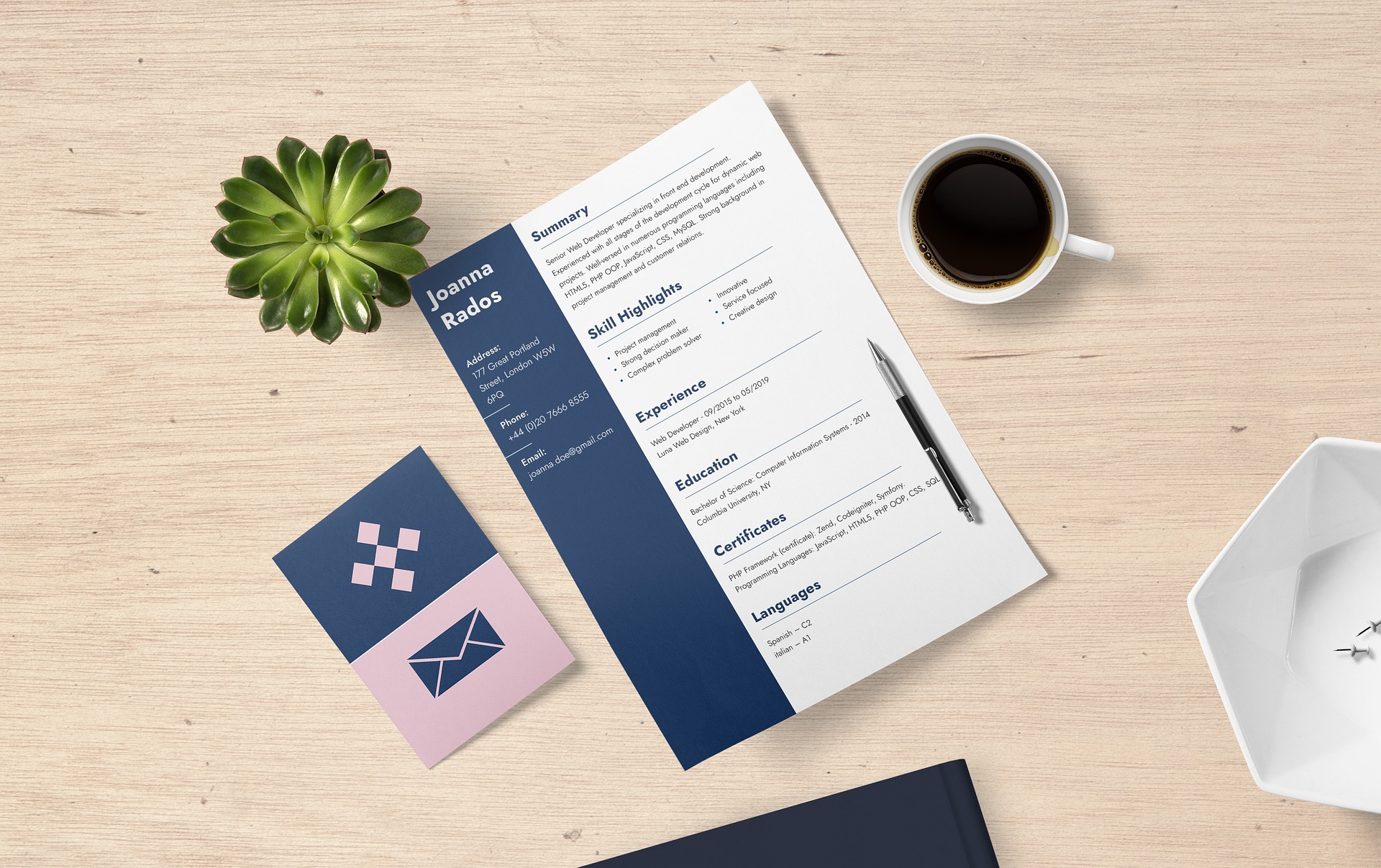
Do you know your resume well enough? Let’s take a hypothetical scenario. You are facing an interviewer and everything is going on well, you are articulation your points, your answers quite well and the interviewer appears to be quite impressed and satisfied with the way you are conducting yourself during the conversation. But then from no-where this question suddenly pops up. “You were spearheading a project a few years back; can you tell us more about it? What was your role in that specific project?’ There is an awkward pause and you are thinking about it, trying to figure out how to frame your answer, but the problem is – you don’t recollect much about it. Perhaps it was long back and you don’t recollect much now, or you missed out removing that part from your resume because it became an insignificant entry in place of some of your latest block buster work and you forgot to brush up about it. In any case, this situation would be the turning point of your interview and your conversation may start spiraling down from there, reducing your chances of making it. A situation like this will bring about immediate doubts in the mind of the interviewer and he/she will start questioning the integrity of your candidature, believing you might have beefed up your resume to improve the attractiveness of your candidature, or you may have resorted to unfair means for getting shortlisted for the interview round. It will certainly prove a point to the interviewer that you are not aware of your own experiences and therefore you are not on top of your game. There is no returning back from this point. It is a complete disaster. Perhaps the only way you could come out of this situation is to openly apologize for it. But that won’t guarantee that you would be shortlisted for the next round or next steps. And that is why it is strongly recommended that be very careful when you are copying and pasting information into a specific template or overwriting using a friend’s or colleague’s resume. And even if that is your starting point for drafting your resume, please make it a point that you read every line and every word to avoid these embarrassing situations. Let me share my experience with you. A few years back, I was interviewing a fairly experienced candidate for a managerial role and he was a very smart engineer in terms of his knowledge and expertise. Everything was going on so well, till I noticed that he had done his engineering from a city that was well known to me since I had spent a few years there during my studies. So, I asked him a very simple question – Could you tell me a few good places to check out in the city, you have done your engineering from? It was light and soft question not really meant to test him on anything. Perhaps, to the best of my recollection, it was just out of curiosity I had asked that question. But what happened next was shocking. He was unable to name even a single important place or places to visit from the city. And that pushed me to ask a few more questions on similar lines, only to figure out that his engineering degree was fake. He was rejected immediately. I am sure you would have figured out by now that a small mistake of this kind in your resume can cost a job. So, please be careful and try to avoid these things. Here are a few lessons and tips that will help you being proactive in addressing some of these issues: Get Familiar with your Resume: It is your resume so you should be familiar with every word and every line mentioned in the document. That’s a given thing, and there is no alternative to it. It is about YOU, and the document is about your experiences, your stories, your credentials, your life to a large measure. You should spend a week on your resume, carefully scanning it with microscopic eyes ensuring you are familiar with every word on it and it reflects something about you. Remove everything that you are not confident of: It is perfectly fine to keep a one-page resume. There is no need to prepare a large document entering stuff that you are not confident of, or dated information that you will struggle to recall in its totality during the interview. You see, the number of pages has nothing to do with your chances of cracking an interview. A crisp one-page document is very much appreciated as it reduces the efforts at the organizational level to make quick decisions, since the information is crisp, concise and without any fluff. Review your Resume regularly: Make it a habit that you review your resume regularly every quarter once and clean it up or update it to the latest experience, pruning stuff that is not required. It will ensure you are in complete control of the content mentioned in the document. Interview or no Interview, this should be a routine once in a few months exercise to update your resume. Now coming to the pit-fall. Let’s assume that you have missed out all the three points mentioned above and still got into a situation where you don’t recall a part of your experience or let’s say you have mentioned it by mistake on the document. Rule number 1, accept the mistake and be honest about it. Don’t try to justify or lie and then build your story on that lie, it will derail the interview process taking you closer towards disqualification. Understand, that a single lie reflects big on integrity issues and most companies have zero tolerance to it. There will be high probability that you will be black-listed for any future appearances, and in a worst-case scenario, it will tarnish your equity permanently in the industry, given that people are so well connected