
Interview Tips

Elevator Pitch - Interview Tips Interview Preparation Jobs Job Search

Foolproof Strategy to Sell Yourself in an Interview

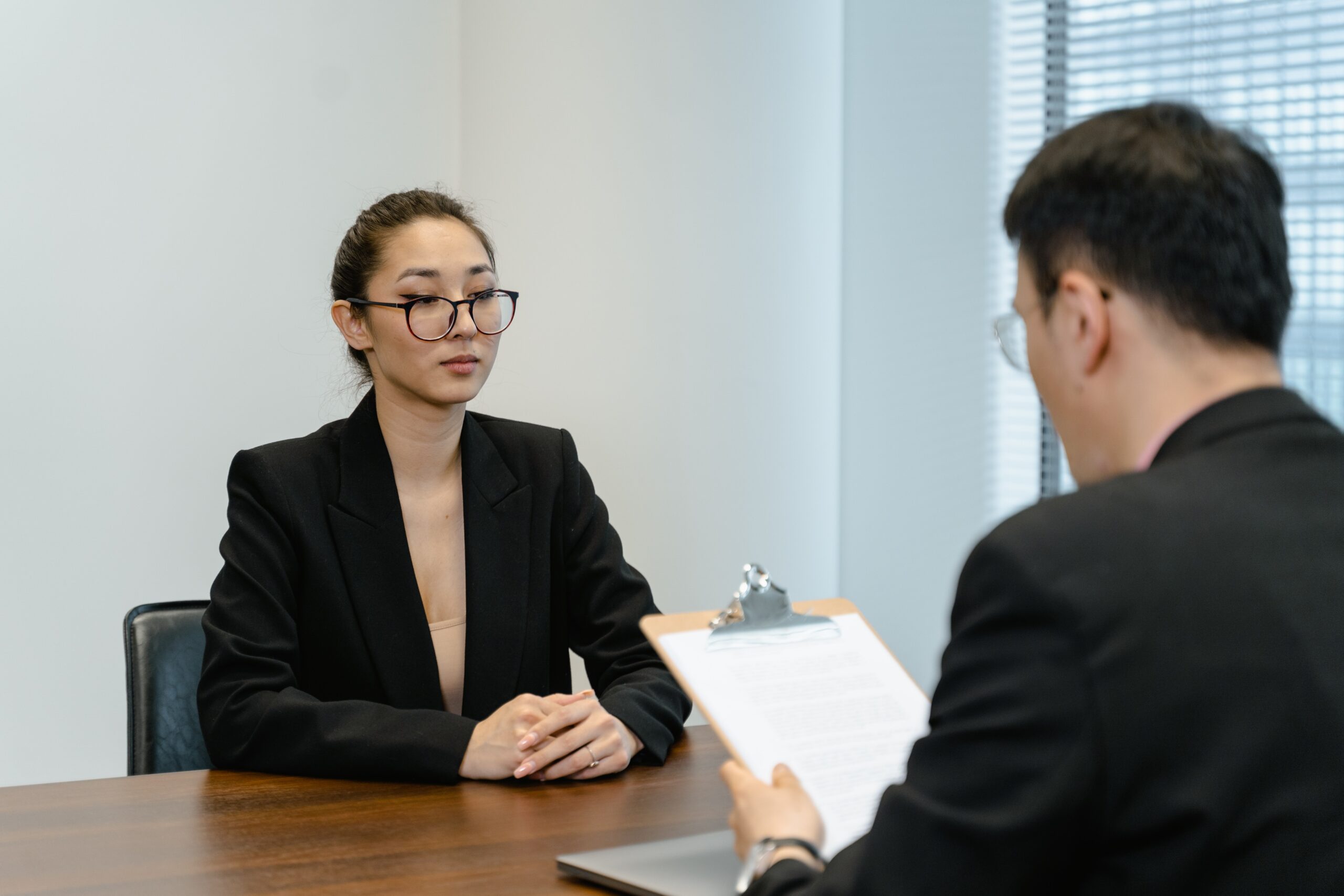
What is the best way to sell yourself during a job interview? What are the interview pitfalls that we should avoid. An interview conversation is about a transaction that involves selling a product or a service and in this case the product or a service is YOU.  And I am certain, being a job aspirant, you would have heard this one-line umpteen times. You have to sell yourself? Haven’t you?  But why to sell yourself? It’s a good question and let me try to bring a perspective. There are hundreds of applicants applying for the same role/job and perhaps out of those hundreds of applicants only a handful were chosen to meet the interviewer to further gauge their skills in line with what is expected from them.  And now from those handful of applicants, only one or two would go further to the final round or perhaps land with a job. Makes sense? Now, let’s talk about another pertinent question. How?  That’s a million-dollar question.  Having spent more than twenty years in the corporate world and hired more than 1000 resources across various roles I undertook, conducting more than 4000 interviews in this span, I bring to you deeper insights, the right perspective and some unmatched tips that can certainly help you in positioning yourself the way you should be to ace an interview, or in other words, sell yourself.  Let’s check this example.  ‘I bring on the table many strengths that can help me be successful at work. Firstly, I have strong work ethics that enables me to meet my deadlines well ahead of my schedule. I enjoy feeling that sense of accomplishment which comes with doing a job well and on time.’ It’s a great answer or a selling strategy, but something is amiss. Can you figure out what?  It has a lot of ‘I’ in it and it appears that there is too much focus given to self, ignoring a critical point – i.e., ‘THEM’ The first rule of selling is – It is about THEM – about the buyer, about the audience, about the organization and the one who has the purchasing power.  There is no harm in bringing a bit of I, which is natural, but during the interview, you have to make it appear (directly or in a subtle way) that it is about them, and not you. And that’s the kind of mindset you would need before you start preparing for it.  Think about what you see on TV, or all around you – advertisements. They are never about the products or services, they are about you, what can they offer you?  A convenience, a good sleep, a great experience, a pleasurable drive, an amazing taste, once in a lifetime vacation, a happy moment, etc.  Think about it.  A car company won’t say – Hey! Buy more of our cars because we want to sell more cars. They would never do it, because it will never work, it has never worked that way for anyone.  They would always focus on YOU, their potential customers, buyers, and offer you a promise – an experience, a driving pleasure or convenience and so on.  So for these sellers, you see you become the most important entity in the whole ecosystem for sellers. And these sellers can go to any length knowing about you.  A lot of money is being pumped by these so big organizations just to understand what customer needs and wants are. The whole market research industry is based on this one fact – What customer really wants and needs?  I am sure you are with me and getting the point I am trying to make here.   So, it is not about you, “ITS ABOUT THEM” Read it a few times, let it percolate down your mind, from conscious to subconscious and stay there. Because once you have this mindset, all your actions will be directed towards that one single point. So now you understand that “It is about THEM” what would you do next, when you start preparing for your interview. Here is some food for thought.  Will you go for the interview without knowing about THEM? Will you prepare your answers without learning about THEM? Will you answer questions that lacks THEM? I guess I have made my point.  What I am trying here is to bring to your awareness the single most important point – When you are preparing for an interview, you should integrate “THEM” into it. You can’t sell yourself effectively without first understanding your audience and what they need and expect from you. And as I said earlier, step one is to shift your mindset into thinking about everything from the company/organization’s perspective. Here is a list of questions to get your started on that mindset.  What can you do for THEM? How can you help THEM in the problems they may be facing? What values can you bring on the table for THEM? How can your skills be beneficial to THEM? What are THEIR goals, objectives, vision, mission? What are THEIR focus areas? And so on. Learn about THEM as much as you can. And that will propel your preparation miles ahead in the interview process and give you a smooth landing spot during the conversation.  Organization websites, news about them, recent rewards and awards, mergers and acquisitions, new launches, a lot of information is already available in public domain, make a good use of it to prepare for the interview. But ensure that you don’t get overwhelmed with so much of information. Keep a right balance and take a judgmental call on which info will be helpful and which won’t be in your preparation.  Create a cheat-sheet or some kind of a fact sheet and write down top 10-15 important facts about the organization. Observe closely how the website is organized, what kind of color combinations is being used.  Every piece of information will give you clues about the organization and its culture. Grab

Elevator Pitch - Interview Tips Interview Preparation Jobs Job Search

How to deal with “Do you have more interviews lined up?”

Multiple interviews can be a telling sign of a high-potential candidate, but how you handle the question about them can either strengthen your position or put your chances at risk during the recruitment process. Let me explain a few intricate details about the recruitment process. It is not just the question-and-answer sessions or a series of professional conversations, but it has various additional facets to it.  A talent acquisition leader from one of the largest MNCs mentioned that by the time the potential candidate enters the interview room, we want to know two key things about him/her– (a) Is he/she likable? and (b) Is he/she the right fit for the job?  Did you get the point? It clearly means that your CV/Resume has already given a lot of information about you during the shortlisting process and basis that the interviewer/panel must have created your profile in his/her mind. Now, if that profile matches with the job description, the interviewer will move to the next round in the recruitment process i.e., an interview round.  So, interviewers’ now will resort to a variety of questions to validate your profile, trying to figure out if you are the best fit for the role, or your skills, characters and experiences will add values to the organization.  Today, we will take a specific question and it is a tricky question that has a potential to de-rail your interview to a large extent, unless you figure out a way to deal with it or smartly articulate your answer. In this blog-post I will help you get to that – How to answer this question or how to avoid getting into a trap.  “Do you have other/more interviews lined up?’  Asking this specific question is a part of an assessment process. The interviewer wants to learn whether you are a high potential candidate with other job options with competing organizations. And that’s fair because with ever changing dynamic market conditions and surging demand for high potential candidates, stability & longevity has become one of the primary focus areas for all the organizations. Every organization wants the new hires to stay for at least two to three years with them and if they figure out during the interview process that you would not stay for long with them given that you have got multiple offers in hand, they would consider moving to hiring more stable candidates.  But here is another perspective, 180 degrees from the earlier one. Let me bring another perspective. Employers may also be curious to know if their competition is hiring better talent. And basis your answer, an interviewer may decide to move swiftly through the hiring process. Also, if your answer is Yes, it may indicate to the interviewer that you are a desirable candidate with the right skills and therefore being sought out by competition too.  Can you notice what I am trying to get to?  There are two sides of the coin and at times there are no straight binary answers. Like in this case, the answer to the question may not be as straight forward as you may be thinking i.e., either a ‘Yes’ or a ‘No’.  Let’s stay on this point for a moment.  Let’s say, if you choose to say ‘Yes, I have other interviews lined up with the competition or I am contemplating accepting an offer’ it would give a message to the interviewer that you may not be very serious about this organization or the job in discussion. On the contrary, if you say ‘No, I don’t have any other interview lined up with other organizations,’ it may end up giving away your negotiation power, since the interview may draw a conclusion that either you are non-competitive or you may be desperate for the job in discussion.  You see, it is a double-edged sword and there is a strong need to find out a common ground between these two extremes. The simple straight answer is this: “I am keeping my options open, but at this point in time, I am focused on this conversation and the esteemed organization. I would like to explore how this job could be a win-win situation for both the organization and my long-term career aspirations.” It is a great answer because it neither says Yes or a No, and at the same time, it comes across as a well-thought-through answer, not rushed, not blurted out. The tone of the words, if politely expressed, is quite affirmative.  Having said that, here are a few tips you should keep in mind while framing your answer.  Every word spoken during the interview, helps the interviewer assess if you are the right fit for the role and if you can be hired for it. So, the best way is to spend adequate time preparing for these softer questions, as they can help you get the job. Now, before I close this blog post, let’s say that you genuinely have got an offer in your hand, but still you have decided to go for the interview perhaps just for the experience or to negotiate a better salary package or may be some other reasons for it. In such cases, I would strongly suggest that give utmost importance and respect to any interview you are considering to give. Take a call later if you would like to accept an offer or not, but give a very sincere effort to it, as if you had no offers and this one is the only one you need to crack to get to the offer. Happy Job Hunting!

Communication Skills - Elevator Pitch - Interview Tips Interview Preparation Jobs Job Search

Importance of Communication Skills in an Interview

Communication skills hold the key to unlocking your interview success, propelling you toward the job of your dreams with confidence and charisma. Covid has changed the rules of the game completely.  If I were to ask you – What one thing according to you has become THE most important thing in your life during and post-pandemic or because of the pandemic?  You would say – Work-Life Balance, Bonding between family members, or peace of mind or Health. And that’s fair. Pandemic has re-shuffled our priority list beyond imagination.  Let’s talk about Communication.  What’s your take? Keeping the Covid Pandemic as a context here.  Is there any change in the way you communicate now compared to pre-pandemic years? I know you would agree that by migrating to virtual world for our day-to-day transactions, there have been tangential changes in the way we communicate with each other. With everyone working from home, there has been a greater need to be effective communicator and if you keenly observe the job descriptions these days, you could easily spot a commonality among them, reflecting to the changing role of how we communicate with each other especially when we are interacting in a virtual environment, working from home using digital tools. Therefore, employers have now started looking for candidates who could be great communicators working in the virtual world.  And even for a moment, if we ignore the whole ecosystem created by Pandemic, great communication skill is certainly an added advantage on the resume irrespective of the effect of the environment. In my twenty years of corporate experience, I have come across some amazing communicators, and I often wondered what made them stand out among so many. And what came to my mind as an answer is – Practice, they must have practiced it so well, it reflected in the way they spoke, in the way their eyes made an eye contact, in the way they asked questions when in doubt.  It’s a skill and is certainly beyond just talking or articulating. Scientifically proven, there is a strong correlation between our ability to communicate well and our ability to get along well with others. This is a critical point, when it comes to job interview. You not only need to effectively articulate your skills, strengths and experiences, you are also required to build a quick rapport with the interviewer, giving him/her a good idea that you have strong communication skills and you can get along well with people.  Communication is not just about good articulation, it is about the gestures, the tone of voice, the modulation in the voice, the listening skills, and the way one should be responding – proactive, polite, constructive, professional, energetic, enabling, transparent and so on. So, if you are getting ready for an interview, great communication should be your top of the list of focus areas.  Being able to communicate effectively with others while working from home is a huge part of making remote work successful in the new-normal era. Having the experience and knowledge of integrating virtual meeting applications into your day-to-day duties is now not just a preferred skill, it is a required skill. If you are unable to communicate effectively with your teammates or co-workers, then how will they know what you’re working on? How will you get to know the people you’re working with? Here are three tips to demonstrate that you are a great communicator, during the hiring process: A. Communication Skills – Talk Slowly: When you talk slowly, and calmly, it shows that you are in control of your emotions. It helps the interviewer understand better. There is no point in blurting out amazingly practiced answers that may appear as barfed on the table. That would have an adverse impact during the interview as it may appear artificially sophisticated made-up stuff, not to mention blurting out or fast speaking is a sign of nervousness. So, don’t try to rush, answer slowly, articulating your points well. Keep a close eye on your breathing while talking and consistently calm yourself down.    B. Communication Skills – Listen Attentively: As said earlier, communication skills aren’t just about articulating yourself; it is also about how attentively one can listen and absorb and assimilate. There is nothing worse than hearing someone answer a question you know they haven’t fully listened to. Aside from coming across rude, it doesn’t give the interviewer much confidence in your ability to pay attention. So, listen intently to everything the interviewer says from the minute they walk through the door. If you are listening attentively, you will be able to answer appropriately. I have seen many who don’t pay attention to what is being said and discussed, their mind is completely focused on framing their answers during the interview process. Sooner or later, it comes out during the process and can be a certain deal breaker. The interviewer is an expert and would figure out in a jiffy if you are listening well or not.  C. Communication Skills – Pick your words carefully: A basket of good words can go a long way but remember not to use overly complicated words in your language, that may not appear normal. Have a good mix of nice words. For example, the word ‘tedious’ can be replaced by ‘complicated’ and so on. Also, play by the rule, trying to mirror the interviewer – if the conversation is formal, try to be more formal and vice versa, but remember not to get too comfortable, crossing the line, as if you are chatting with an old friend. You are talking a potential employer so keep it in the boundaries of professionalism. Many a time, the interviewer will try to drag you into a comfort zone but keep yourself on this side of the line.      Remote working is here to stay. And with so many companies permanently shifting to a work-from-home model or work-from-anywhere model, effective communication between the workers in a remote environment using digital tools and

De-Strss - Interview Tips Interview Preparation Jobs Job Search

How to De-Stress before an Interview?

De-stress before an interview and pave the way for a confident and successful performance with these proven strategies and tips. Let me ask you a question. What differentiates great speakers from not-so-great ones? Wait, let me complete my point before you blurt out your answer. Let’s say there are two gentlemen, named X and Y. Assume that both are great in their subject knowledge, their skills, in their articulation, in their thought process, in the way they speak, and present themselves. In short, both are mirror images of each other, as far as the phenotypical qualities are concern. Now, go back to my question and think about the answer.It’s hard, right? Let me share a quote I had read somewhere.It is about the two most outstanding Cricketers in the history of Cricket – Sunil Gavaskar and Sir Viv Richards. “The greater the occasion, the better their performances.” Let’s stay with this quote for a minute because it reflects something very important. It talks about Mental Strength. It talks about resiliency; it talks about how important it is to focus on inner engineering or in biological terms it is called as “Genotypical” skills. Are you with me? I am sure by now you would have got to the point that I am trying to make here. The differentiating factor between two great personalities is how they deal with tough situation, how they react when they are facing the music or the grind of life. Do you consider yourself as a mentally tough person? While you think about it, let me tell you, it doesn’t comes naturally. We are not born with it. Mental strength is a function of flexing mental muscles. And it needs a lot of patience and practice.With this perspective in mind, let me return to the subject of our discussion. Interview preparations can be very stressful and mental strength plays a very important role in the process. Let’s say, you have gone through all the possible questions and practiced your answers so many times. You have done all your research about the organization and have got your reference fact sheet ready in your mind. You have brushed up your experience, your knowledge and gone through the job description in detail. You perhaps have done every possible thing you could do on the road to prepare for the upcoming interview. But as the moment or the D-day begins to inch closer, you are slowly getting engulfed in a cloud of anxiety. Sounds familiar? You have been waiting for this moment for a long time and now that it is here, you are not sure about your preparations. You start doubting everything unable to control your thoughts.Well, it is fairly normal to be stressed out in such situations, since you get only one shot and if you fail, you may have to wait for a long time to get back to the same place. Or there could be a lot on stake for you with this interview. I don’t mean to say that you will not have more opportunities coming your way, I meant, once you fail an interview for a specific organization, there is a minimum cooling period of a year or two before you can apply again. But not to really think negative here, because, believe it or not, disqualification in a recruitment process is also a function of job-profile-experience mismatch or due to fitment issues at the organization level, without any fault of the candidate. And it’s a journey, got rejected in one, move ahead and focus on the next one. Keep on applying, something will click, wait for your time and keep on progressing in life. If disqualification or the fear of disqualification brings bouts of anxiety to you, then hang on, keep on reading, I am getting there. I am going to suggest a few simple easy to do stuff that can help you relax and calm your nerves. Before you get to the list below, be practical, there are no rules, what may work for you may not work for others. These are some guiding principles that may help you along the way, along your journey. But you are free to find out your own ways, there could be so many. Let’s now look at what I have got here. A. De-Stress – Adopt a Tangential Mindset: Consider you are 90 years old right now and you are reflecting back at your life and its highs and lows and its ups and down. Will it matter then that you have failed or cracked this interview? Certainly Not. This perspective is known as Fast Forward Mindset. This is a beautiful exercise to trick your mind to relax and calm your nerves. It may sound silly, but come to think of it more seriously, it works so well, and with practice it can do wonders. B. De-Stress – Practice STOP Method: According to executive coach Chris Charyk, this is the ultimate mental trick to tackle any stressful situation. It has four steps to it and it goes like this: a. Stop what you are doing and focus on thoughtsb. Take a few deep breathsc. Observe what’s going on in your body, emotions, and mind, and why you’re feeling themd. Proceed with an intention to incorporate what you observed in your actions This mental trick slows down deliberately the things you are doing, and to a large extent it also stops the feeling of anxiety that takes you over in those moments. It reminds you that you have the power to banish your own fears, doubts, and nerves. And so, do it, this is something you should practice often. It is not just before the interview, but often so that your mental muscles are nicely flexed. C. De-Stress – Prepare for the Worst: It is another great mental trick, pretty well known, and I guess we all have heard from our parents, isn’t it? “What worst can happen? Get over it.” Remember? I am sure you

Body Language - Interview Tips Interview Preparation Jobs Job Search

Body Language: Proven Tips for Success

Body Language speaks volumes without saying a word – it is the silent key to unlocking success. Let me ask you a question.Have you been to an interview recently and gave all the right answers, articulating it in the best possible way, and you had the right qualifications and skills for the role in discussion, but you ended up getting rejected? I know we all have experienced it in our lives, and am sure you must have contemplated, reflected and deeply thought about what really went wrong in the process, when you thought you did so well in your final interview round. More than being disappointed, it is a baffling situation that leads to fogged mind with a lot of unanswered questions. And let’s be honest, it dents our confidence levels too to some measure.In my twenty years of experience with large MNCs, I have witnessed it so many times while conducting interviews for multiple roles. I have seen and met so many bright folks, doing so well in their interview rounds but unable to cross that golden line. In this blog post I am going to throw some light on what really went wrong, bridging the gap in your understanding and answering to those questions that may have fogged your mind for a long time.And before I do that, let me ask you another question. Think about this – In your list of priorities while preparing for an interview in the past, where was “Non-Verbal Gestures” or “Non-Verbal Communication” or “Body-Postures”? I am sure you are smiling, because both of us know that it never featured in your list and it won’t because believe it or not, psychologically we are groomed to think that an interview is a professional conversation limiting to only questions and answers, and therefore, we are maniacally focused on questions and answers, ignoring other key aspects. And to add to it, I have seen aspirants shabbily dressed in t-shirts and casuals while giving interviews – I will cover it in more detail in another blog post. But the point that I am trying to make here is – we are so ignorant of the fact that non-verbal gestures can lead to disqualification silently, leaving us confused and delirious. There are no two thoughts about it.Whether we realize it or not, our body continue to communicate something to the interviewer throughout the interview process. These are subtle indicators and play a very vital role in the recruitment process. How we stand, how we sit, our hands movement, an eye-contact and so on, communicates something about us to the interviewer. They can reveal the truth digging out from us, without our knowledge. Therefore, it is important for a candidate to be cognizant of such an important factor in the recruitment process, and learn to project himself/herself confidently with assertiveness and positive outlook. Here is a list of 3 Tips to help you take control of your body language during the interview, making sure it emanates the right message to the panel/interviewer. A. Body Language -Sitting Posture: While you need to sit comfortably during the interview, crossing your legs, or too much slouching in the chair will not send the right signal. It will indicate easily that you are nervous or you are not giving due importance to the position or the role in the discussion. Sit comfortably straight and make good use of the back to help you with that. The hand movement has to be extremely controlled, no clasping, no folding of hands, as it will indicate some kind of conflict within or manipulation of the answer you have been trying to articulate. Try steepling and limited movement of hands while articulating your points. No drooping shoulders, try to bend slightly forward waist up in the chair, because that says you are interested in the job and very keen to move ahead with the deal. B. Body Language – Eye Contact: When you make eye contact and hold it consistently, it gives an indication that you seem attentive and trustworthy. But when you avert an eye contact, it indicates you are nervous or hiding something. Also, there is a difference between good eye contact and gazing, and it is important for a candidate to understand that difference. So don’t gaze. The best way to deal with this is, to make eye contact, stay for a few seconds, enough to notice the color of the eyeballs and then shuffle it between the two eyes of the hiring manager. That would be apt and is considered to be good eye contact. Also, no looking down while taking pauses or articulating a response. Looking down is indicative of the fact that you are trying to hide something or you are nervous about something. Also, there is so much literature written on eye movement during the interview, I strongly recommend everyone to study and include them as part of their interview preparation. C. Body Language – Breathe: The way you breathe reflects what is going on inside you. Fast, short and shallow breathing shows nervousness. And it would also lead to stammering at times during articulation. So, try to calm yourself just before the interview. There are so many great leaders and speakers and presenters, who resort to ten-minute quick meditation techniques before addressing large gatherings. It helps in bringing in the focus on the right subject, de-cluttering the mind. It is proved that a few minutes of silence before the interview, helps in organizing thoughts in a structured way. So, take a few minutes to close your eyes, in the corner of the room, or where ever you are, and do some pep-talk with yourself and try to relax, or just be silent and visualize that you have already cleared the round and coming through the door smiling and ecstatic. While practicing this quick calming method, take deep breaths, and inhale for a few seconds and then hold on to your breathing for a few seconds and then

Resume Mistakes - Interview Tips Interview Preparation Jobs Job Search

Three Resume Mistakes and How to Avoid Them!

Resume mistakes are the primary hidden threat to your opportunity. Pandemic has changed the rules of the games tangentially. And in such an uncertain and competitive job market there’s never been a more important time to refine your resume, ensuring it is an apt representation of your experiences, character and lessons. It is your first connection with the world outside acting as a fulcrum in creating your first impression. It should tell your story in a way that can be easily comprehended by the recruiters when they scan through it. Keep in mind that a hiring manager or a recruiter has to scan so many resumes on a regular basis that unless your story is written in an engaging way, it will fly off his desk in quick succession. Also, they are so experienced in their job that gazing through it for a few seconds, they could figure out if your candidature is appealing or it is just another lifeless document written in a standard template, perhaps copied from other resumes. I am not against using well-established templates. There is nothing wrong with it. But I am not supportive of the fact that once you have populated (or shall we say copy-pasted) your stuff into the new template, you are ready to ship it to hiring managers/recruiters without investing meaningful time in bringing everything together into a cohesive and engaging storyline of your character, values, and virtues. I strongly believe that your resume demands the investment of quality time. A good start is half the battle one! Remember? It is so true in case of your resume. By the time you reach to a face-to-face interview round, the hiring manager would have already formed your profile in his mind and perhaps to a large extent mapped your profile to the job role he/she is hiring for. And in case your profile or your story line that is coming out of your resume, fits the bill, the face-to-face round will merely be a validation of the profile. Building a storyline may sound simple and straightforward job but trust me it requires a holistic and strategic thought process, bringing in the right mix of strategic and tactical aspects. So, before you get started, it is advisable to take a pause, think and reflect upon what are your key strengths, what are your deeper expertise that can bring about a unique storyline on your resume, setting it apart from the competition. It is also important to improvise your resume, before sending it to a recruiter or hiring manager bringing in some level of customization keeping in mind the nature of the organization and industries you may be aiming for. Once you have got all figured out in your mind, the next step is to bring it on a piece of paper. It is certainly the most difficult task in the process. Creating a good balance between strategic problem-solving thought leadership and tactical day-to-day transactional experiences is a time-consuming job, and can be tricky and frustrating. Having said that, let me shift gears and come to a very important topic – Mistakes! In your Resume! Yes, any mistake in your resume will certainly drastically reduce your chances of getting shortlisted for the interview round. So, when you have finished drafting your THE DOCUMENT, you should spend time reading through it line by line, not once, not twice, but five to ten times, to eradicate any possibility of mistakes. You could also request a family member or a friend or a teacher to do a thorough review of it. That way a fresh pair of eyes can scan mistakes your eyes might have missed out. Here is a list of 5 mistakes you should watch out for, and try to avoid while preparing your resume. Resume Mistakes – Spelling & Grammatical Errors: Spelling and grammatical errors are not just hygiene factors to be taken care of, they indicate something far deeper – these are the function of two very important essential skills required in any job e.g., Attention to details and Communication. They are the most common deal-breakers in the process. Common mistakes include typos, and wrong tenses. I have seen many resumes with future tenses being used describing their past experiences and that is a disaster. I understand, English Grammar may not be your forte, but you can’t afford to make such mistakes. Get in touch with your English professor for vetting the document. Resume Mistakes – Cluttered & Clumsy Document: We want to impress the hiring manager by putting a lot about us in the resume, but it goes against the fact that a simple two-page document is far easier to read through than going through a four or a five-page document, full of past experiences that may not even be relevant to the role in discussion. Also, a simple document with the right line spacing can help the hiring manager in taking faster decisions than struggling to go through a clumsy document with an excessive use of boxes and borders in every page. Further, confusing order of headings and information can distract the hiring manager, drastically reducing your chances of getting shortlisted. Focus on a crisp one-two page document that has the most engaging storyline of your life. Resume Mistakes – Tone of Language: Language and articulation is a great differentiator. A resume can appear boring or exciting depending on the way it is drafted. Often, resumes written in a passive language appears confusing and boring. “I achieved 30% growth in the sales year on year” is sounding a lot more exciting than “The sales growth was 30% year on year.” Can you see the difference? I am sure you can. Active voice brings a faint tinge of command in the language. It subliminally indicates to the hiring manager that you played an active role in the projects. So, draft your document in a way as if it becomes a talking document and not a reading document. I re-iterate, your resume

Lying Signals - Interview Tips Interview Preparation Jobs Job Search

Lying Signals During the Interview

Lying Signals – Do you know how does it impact your conversation during a job interview? “Sorry, the role/position has been put on hold.”“We will get back to you or we will let you know.”“We have not made any decision, as the decision maker is on leave or travelling or busy or unwell.”“We have got the positive feedback about you from the hiring manager/panel, but we are in the process of assessing other candidates. If we decide to go ahead with you, we will communicate and reach out to you.”And a few days later, you receive a rejection mail.Sounds familiar? I am certain you must have experienced such baffling situations, while you were anticipating a positive outcome of the interview you gave recently, and were eagerly waiting to join the esteemed organization.Throughout the interview process, you did everything right – you appeared confident, you were articulative in your responses, you gave all the right answers and you had the right skill-sets for the role in discussion. Then what went wrong? Let me bring a larger perspective here. I am not questioning the integrity of the process here, and there could be valid reasons. But in general, this has been my experience being part of the industry for more than twenty years. At times it is hard to figure out the real reason for disqualification. And in my personal opinion, I strongly support an honest and open feedback from the organization in case of rejection of being put on hold. But that’s not the point of discussion in this article. Let’s talk about what could have gone wrong that led to one of the aforementioned responses from the organization. Throughout the entire job application process – the potential candidate’s (i.e., your) goal is to make himself/herself seem like the most desirable candidate and the best fit for the role or the job. And there is nothing wrong with it, because the objective is to do well in the interview and get the dream job.But, how do we do that? Are we really truthful and honest about us? Don’t get me wrong here. I am not trying to show you a mirror. All I am trying here is to explain a perspective that can help you with your planning and at the same time caution you about a few things you should never resort to. Coming up with answers to interview questions involves being strategic. After all, it’s smart—and expected—to frame your responses to your own advantage. And, therefore we focus only on the positives when responding to interview questions. We talk about our favorable experiences and skills while avoiding mentioning about our weaknesses, and knowledge gaps. However, there’s a difference between picking up which details we decide to share and outright lying, and sometimes that line can become fuzzy. Lying during the job interview process to beef up attractiveness to our candidature is pretty common these days. The desperation of getting a job can drive such behaviors among the candidates. But, the flip side of it is that it leads to bringing an element of doubt in the minds of the hiring managers, which in-turn is at the root of those aforementioned responses. I recommend- try to be as truthful as possible, but don’t be brutally honest about everything. Try to be more strategic in framing your answers avoiding common pit-falls. But having said that you have to be cognizant of non-verbal gestures and subtle indicators that play fulcrum in the process and can lead to your rejection, even though you think you did pretty well. Here is a list of Lying Signals you should be aware of and at any cost should steer yourself clear of them: A. Lying Signals – Looking down: Don’t look down at the floor frequently breaking the eye contact with the hiring manager or the panel. It means something is wrong with what you have been trying to articulate. It shows you are nervous or may be hiding something. B. Lying Signals – High Voice Pitch: Keep it normal, a high-pitched voice is an indicator that you are trying too hard to prove your point and could be making it up. Remember a polite answer goes a long way and keeping composure throughout the interview process is an acquired skill set and remember the hiring manager will try his/her level best to check how you perform or react to different situations and scenarios. So, keep it cool and answer politely. Even if you don’t know the answer, say it politely. C. Lying Signals – Clearing Throat: There is a scientific reason behind it. The central nervous system will stop the flow of saliva and your throat will dry up if the question has hit your weak point. Keep it in mind, it is better to be honest about the fact that you don’t know the answer, than trying to clear throat and making it all up. D. Lying Signals – Touching Your Face: If you are frequently scratching your nose or ear lobes, it gives a subtle message to the hiring manager that you are trying to bring an element of fabrication. So, it is best possible to avoid it. Now, there could be a scenario that the room is humid or you are sweaty due to the environmental factor, but in that case you should take care of hygiene and apt dressing basis the environment. However tempting it may appear to lie during a job interview, there are some really good practical—and moral—reasons to avoid it. It could damage your reputation in the industry over a period of time. And with a robust background check process in place, there will be a very high chance to get caught soon. Let me share an experience. When I was working for one of the biggest financial services organizations a decade or so back, a lady use to work in my team, and she was doing pretty well for herself, a good performer. But, three months

Relax - Interview Tips Interview Preparation Jobs Job Search

How to relax yourself before the Interview

Do you care to relax before a Job Interview? “I am not sure what will happen in the interview.”“I am not good at it.”“This is not my cup of tea.”“I know, I will get questions I won’t know answers.”“I am not sure I can crack this interview.”“It is going to be so tough.”“How will I answer those questions? I don’t have enough experience in that area.”“I am not sure if I am well prepared for the interview.”And so on.The list of counter intentions is endless, and who is responsible for it? Who should be blamed for it? You see, our mind loves overthinking, devours rolling up similar thoughts again and again, and if they are negative thoughts, the devouring is euphoric and slips it into autopilot mode. And until consciously disengaged, the thoughts are rolling up into a crude mass of something, becoming bigger and bigger with each passing minute. But hey, hang on, let me bring some perspective here and show you how to relax your mind.At the outset, let me tell you that it is natural to feel anxious before an interview. There is nothing wrong about it. We are human beings, and we often doubt ourselves, our preparations and our capabilities, rolling up so many negative thoughts in our minds, pushing us to the edge. Can you control your brain? Can you direct your brain not to be nervous? Not to focus on negative thoughts? Perhaps you can, but look at the other end of the spectrum – trying to relax yourself. And that is something we can control resorting to proven ways and means. Long back I had read in a book, the title of which I could barely recall, and it goes like this – “If you are on top of your game, stress won’t come to your vicinity.” It has stayed with me since then. I strongly believe in it. And it has a direct correlation with the subject we are discussing “How to Relax”. By ‘being on top your game means that you have sincerely invested adequate time in preparing for the interview. You got to remember that every additional hour you spend in preparing for the interview, you improve your chances to get to the other side. It is not a chance encounter, but a very structured professional conversation and therefore it requires structured preparation too. But, relaxing before an interview is extremely important to do well. By preparing well and adopting the right attitude we can learn to control our pre-interview nerves, relax and channelize them into something positive. Here is a list of a few tips that can help calm your nerves and relax your mind and greatly assist in your readiness to face an interview: A. Thorough Research about the Organization: Do a thorough research about the organization keeping a few areas in mind, e.g., latest awards and accolades, news about mergers and acquisitions, product launch and so on. Look up for the “About Us’ section on the website and go through it, making your notes. Makes notes on the key stakeholders, company history and its background and key financials. The more you understand about the organization and its culture, the easier it will be to articulate and explain what kind of values you could add to the role. B. Practice Commonly Asked Questions: Make a list of commonly asked questions and frame your smart answers strategically. Practice them multiple times before the interview. It will add to your confidence while you articulate your answers during an interview. It can also leave a great impression on the interviewer about the level of consideration and keenness you have extended to the organization. These questions are readily available on the net. But I would caution you, don’t get overwhelmed, there are so many variations of similar questions. Keep a list of 20 good questions and prepare your answers and organize your thoughts. Most probably, nothing will be asked beyond these 20 questions, but you should learn about the various ways a same question can be asked e.g., what are your strengths? Can also take a flavor of – Tell us what you can do for us that others can’t? C. Set aside sometime to Meditate: This is my favorite. Often, Meditation doesn’t rank highly on Job Preparation To Do list, and it is due to our various inhibitions. But remember, it is the trusted tool for bringing in added focus and keeping the mind relaxed. It is not a tedious or an elaborate exercise, it is just about closing your eyes and trying to focus on your breathing, while reminding oneself that what is best for you will follow. It can also eliminate distractions and can bring added clarity in articulation. It can being quietness to relentlessly overthinking mind, that in turn can de-clutter thoughts brining in a lot of clarity on the next steps. D. Try to Change your Perspective: Interviews are often stressful, but if you start thinking about them as your opportunities to test your limits, to figure out your real character – what are you made of, how well you can handle a situation like this? It will bring a different kind of feelings inside. Further, consider interview as merely a professional conversation without worrying about the final outcome. Think about the hiring manager as someone, who would like to see you do well professionally. It will help in managing interview nervousness in a better way. E. Normalize the Situation: Think about this interview as one of the many interviews you will get to attend in your life. Consider it as an opportunity to practice for future opportunities that would come your way. So, consider it as a learning opportunity and keep it limited to that, without too much bothering out the outcome. It may sound silly at first, but pause for a moment and ponder on this point – it will start making a lot of sense to you, once you get to an understand

Scroll to Top